How to Scale Your Clothing Brand From Your First Order to Ongoing Production
Most clothing brands don't fail because of bad designs. They stall between sampling and scaling because they treat each order as a standalone event. The decisions that carry you through a first run are not the same ones that build a repeatable production system. A reliable wholesale partner changes what's possible at every stage, not just the first.
In this blog, we’ll walk through how clothing brands can scale from their first order to ongoing production with smarter blank selection, MOQ planning, decoration choices, supplier control, and repeatable reorder systems.
Know Where You Stand Before You Scale
First-order and ongoing production operate under different rules. Your first run tests design, sizing, and market fit. Ongoing production demands consistency, lead time planning, and supplier reliability. Treating them the same way is where apparel brand growth planning breaks down.
Before you increase volume, look for concrete demand signals. Consistent sell-through on your first run, repeat purchases, and inbound restock requests all indicate your brand is ready to move beyond one-off runs. Scaling before those signals exist adds inventory risk without adding business value.
Choose Blanks That Hold Up at Every Order Size
The blanks you choose at order one should be the same blanks you rely on at order fifty. Fabric weight and construction set your quality baseline, and that baseline gets more visible as volume increases. A garment that looks acceptable in small quantities will expose every inconsistency at scale.
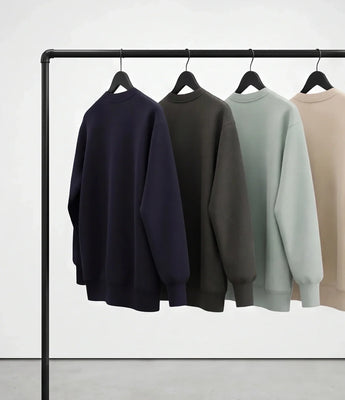
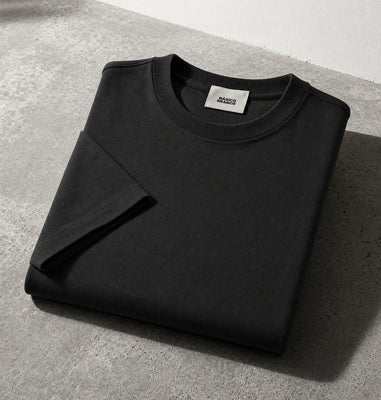
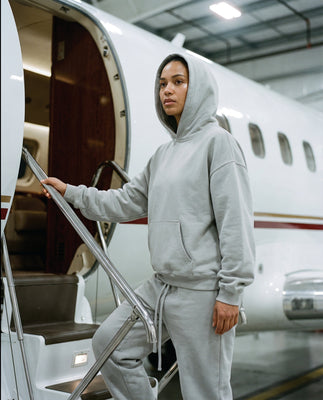
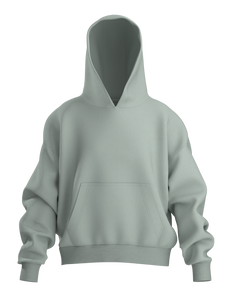
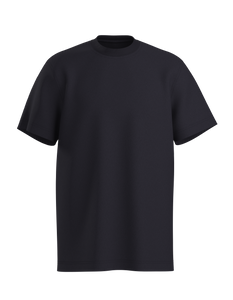
Basico Branco's 240 GSM organic cotton delivers the weight and structure retail customers expect from a premium tee. The 210 GSM jersey suits lighter, more versatile programs. The 420 GSM fleece is built for cold-weather collections where warmth and durability are non-negotiable. Choosing the right weight from the start means your reorders match your original product every time. That's the foundation of growing a clothing brand from small to large orders.
Understand Your MOQ Options and How to Use Them
No minimum order quantity for blanks means early-stage brands can test garments, confirm sizing ratios, and validate colorways without committing to volume they haven't yet earned. That flexibility protects your margin while your brand finds its footing.
When you move into decorated merchandise, the 50-unit MOQ on printed merchandise gives you a clear planning threshold. Structure your first decorated run around real demand, not projected demand. Ordering against actual sell-through data or confirmed pre-orders keeps your production aligned with your real business position, not your best-case forecast.


Pick the Right Decoration Method for Your Growth Stage
DTG and DTF printing are well-suited to lower-volume, design-heavy runs where colour accuracy and detail matter more than per-unit cost efficiency. These methods give you flexibility at the start of a product line before you know which designs will perform.
Embroidery and bulk-friendly decoration methods become the stronger choice as volume grows. Embroidery carries a higher setup cost but delivers a durable, retail-grade finish that holds across hundreds of units. As you scale apparel production, decoration choices directly affect per-unit cost. Locking in the right method for your volume stage protects your margin as order sizes increase.
Work With a Single-Source Production Partner

Managing blanks from one supplier, printing from another, and labelling from a third introduces variables at every handoff. Each handoff is a point where quality, timing, or spec consistency can break down.
Basico Branco covers blanks, private labelling, printing, and embroidery under one roof, with all production and fulfillment handled in Portugal. That single-source structure delivers consistent quality control and predictable lead times across every order. The Canucks and Calgary Flames partnerships show what that model produces at scale: retail-ready garments fulfilled reliably for professional organizations with no margin for error. Fewer handoffs mean fewer variables and more predictable outcomes as your brand grows.
Build a Reorder System, Not Just a First Order
Your first production run should function as a repeatable template. Lock in fabric specs, colorways, and sizing ratios from the beginning. Every detail you document after your first run reduces the decision load for every subsequent order and helps maintain consistency across your product line.
Reorder timelines matter as much as order size. Build your restocking schedule around your actual sell-through rate, factoring in production and fulfillment lead times to avoid a stockout. Stockout gaps cost you sales and erode customer confidence. A planned reorder system, built on a dependable supplier relationship, is what separates brands that scale from brands that scramble.
Build a Production System That Can Scale With You

Scaling your clothing brand should not mean juggling suppliers, chasing timelines, or compromising the quality your customers already expect. Basico Branco helps brands move from first orders to repeatable production, with premium blanks, private labelling, printing, embroidery, and fulfilment handled by a single reliable production system. From no-MOQ blank testing to decorated merchandise runs, you get the flexibility to start smart and the structure to grow with confidence.
Build a smoother, more reliable path from first order to ongoing production with Basico Branco’s wholesale apparel solutions.