The True Cost of Switching Blank Apparel Suppliers Mid-Production
When a supplier raises prices, misses deadlines, or sends inconsistent samples, switching may seem like the obvious move. If you find someone cheaper or faster, move forward with them. Simple enough.
Except it rarely is. The cost-saving move of switching blank apparel suppliers mid-production can result in product mismatches, delayed launches, repeated approvals, and customers who notice something feels different about the garment they just received.
This guide covers the real risks brand owners face when changing suppliers mid-run, helping you make an informed decision.
Why Mid-Production Supplier Changes Look Simpler Than They Really Are
There are plenty of legitimate reasons to consider switching, such as:
-
Rise in prices
-
Stock becomes unreliable
-
Broken/improper communication.
-
Degrading sample quality
All of these are real problems that affect a production run. The issue is that blanks from different suppliers are not interchangeable, even when they have the same label or category name.
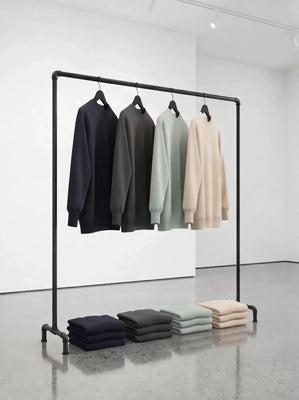
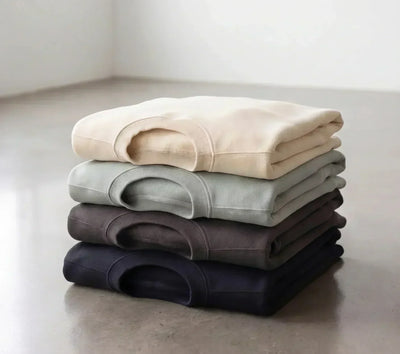
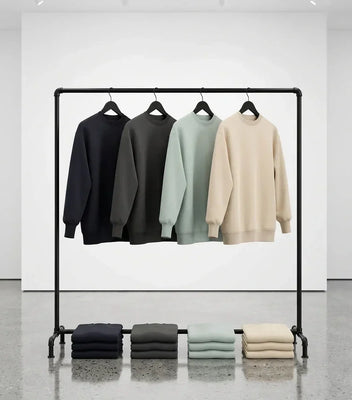
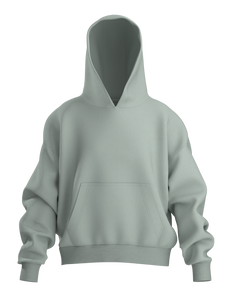
A crewneck sweatshirt from one supplier can differ in fabric weight, fit, hand feel, and colour tone from another. Switching suppliers does not just change your source. It changes the product itself and everything built around it.
The First Hidden Cost Is Product Inconsistency
The immediate risk is that the new garment may not match the original. You can face multiple product inconsistencies, such as:
-
Shift in the weight of the fabric
-
Difference in the way fabric feels on the skin
-
Colour tones vary between suppliers, even when the colour name is the same
-
Change in silhouettes
-
Sizing is identical, but the fit differs across the chest, sleeves, or body length.
Initially, these differences may seem minor. But if you've already built a collection, prepared a lookbook, or planned a launch around the original blank, these issues will quickly become evident. Pieces may not match the way you expected, and the overall line can feel uneven.
Even small inconsistencies can break the sense of cohesion across your products. This affects how customers experience your brand. When product quality feels inconsistent, it becomes harder for customers to trust what they’ll receive.
Timeline Disruption Usually Costs More Than the Unit Price Difference

Beyond quality, switching suppliers also affects your timeline. Production is a multi-step process, and changing suppliers can:
-
Disrupt production sequencing
-
Push back decoration bookings
-
Shift launch calendars
-
Disrupt wholesale or event commitments
-
Create delays across the campaign schedules
Apparel sales are often timing-dependent. Whether it’s a season, trend, campaign, or product drop, a delay could cause you to miss the window entirely.
Supply chain resilience research identifies consistency across supplier transitions as a key factor in protecting customer-facing product standards during supply chain changes.
When Switching Suppliers Mid-Production May Still Be the Right Call
Although switching suppliers mid-production isn’t ideal, it may be necessary in some cases. Here are cases where staying with a supplier creates more risk than moving on.
For example, it may make sense if you’re dealing with:
-
severe and ongoing quality failures
-
Repeated delivery fulfilment problems
-
unreliable stock availability
-
Poor communication that puts the entire production at risk
In situations like these, staying with the same supplier can cause bigger problems.
Here, the issue is not whether to switch, but whether you understand the full cost of switching before making the decision. A strategic switch carries far less risk than a rushed one, if planned with time for resampling and proper lead time.
What Brand Owners Should Check Before Making the Change

Before approving a new supplier, evaluate these points against your current blank:
-
Fit Match: Does the silhouette align with your existing product across key sizing points?
-
Fabric Weight and Feel: Do the GSM and hand feel match the standard your customers already know?
-
Colour Consistency: Are the colour tones close enough to work within your existing range?
-
Wash Performance: Does the garment hold its shape, softness, and colour after two to three washes?
-
Decoration Outcome: Run a test print or embroidery before committing to the new blank.
-
Realistic Lead Times: Can the new supplier actually deliver within your production window?
-
Total Landed Cost: Include resampling, potential delays, and internal time, not just the unit price.
Physical comparisons will tell you more than supplier claims or spec sheets. Request a sample from premium blank suppliers to compare before making any sourcing decision.
The Cheapest Switch Is Not Always the Lowest-Cost Decision
Switching suppliers mid-production introduces hidden costs in quality, timelines, team workload, customer trust, and long-term brand consistency. The quoted unit price is only one part of the real cost.
Strong sourcing decisions protect how your brand is experienced by the customer who receives the product. The right partner is one you do not need to switch away from.
At Basico Branco, we are built for exactly that. Consistent quality for brands that take their product seriously. Explore our full range of premium blank apparel and find a sourcing partner built for the long run.