How Decoration Method Changes What Blank You Should Order
Most teams pick their blanks first, then figure out how to decorate them. That sequence costs you money. Your decoration method should decide the blank, not the other way around. Ink, thread, and transfers each demand specific fabric weights, fibres, and finishes to perform.
Ordering blanks before you lock in a print method is the mistake we see most. A blank that looks great on a hanger can reject ink, blur fine detail, or pucker under a heavy stitch count. Fabric weight, fibre content, and surface finish shape your final result far more than colour or cut.
In this blog, we explain how screen printing, DTG, heat transfers, and embroidery change the fabric weight, fibre content, and finish your blank needs.
Why Your Decoration Method Comes First
Your decoration method sets the requirements for fabric, weight, and finish. Screen printing wants a flat, tight surface. Embroidery wants structure. DTG wants high cotton content. Choose the method first, and the right blank becomes obvious.
Before selecting garments, define your decoration requirements upfront, including the method, artwork format, placement, size, colours, and number of print positions.
Mismatched blanks force reprints, and reprints wreck timelines and budgets at scale. A 200-unit run that fails inspection turns into a full reorder, not a quick fix. The printing method you choose directly shapes which blanks work.
Our vertically integrated production keeps blanks and decoration aligned under one roof in Portugal. We control the blank, private label, print, and embroidery, so specifications stay consistent from the first sample to the final box. That single-source model takes the guesswork out of choosing blank apparel by decoration method.
Screen Printing: What the Best Blanks Need
Screen printing needs smooth, tight-knit surfaces for crisp ink lay-down. A dense weave holds sharp edges and keeps ink from sinking into open loops. Texture ruins clean registration.
Our 240 GSM organic cotton suits bulk screen runs. The premium weight gives you flat panels and minimal surface texture, so multi-colour designs register cleanly across hundreds of units. Ring-spun fibres keep the face even for consistent coverage.
This method fits large-quantity team and merch orders where per-unit efficiency matters. When you compare screen printing and embroidery, screen printing rewards flatness and fibre consistency over bulk.
DTG Printing: Fibre and Surface Requirements
DTG needs high cotton content for the ink to bond. Water-based inks work best with cotton fibres, while blends with higher synthetic content may produce weaker colour and less consistent results.
Current DTG fabric requirements favour cotton and cotton-rich blends, while pretreatment and heat curing also shape the finished print.
Ring-spun organic cotton delivers detailed, full-colour prints because the smooth face carries fine gradients and photographic detail. Pretreatment sits evenly on a smooth-faced fabric, improving vibrancy and wash durability.
DTG is well-suited to small-batch and on-demand runs where full-colour artwork changes often. Our 240 GSM organic cotton meets these DTG printing blank requirements without adding cost or complexity.
DTF and Heat Transfer: Choosing the Right Substrate
DTF works across cotton and many blends, which makes it a flexible option for mixed apparel programs. The transfer adheres to a printed film rather than bonding directly with the fibres, giving you more freedom in substrate choice than direct printing allows.
Compatibility still depends on the transfer material, fabric composition, and application settings. Before production, match the heat-transfer material to the fabric rather than assuming one transfer will perform across every substrate.
Surface smoothness also governs adhesion and durability. A clean, even face allows the bond to form fully and survive repeated washing without cracking or lifting around the edges.
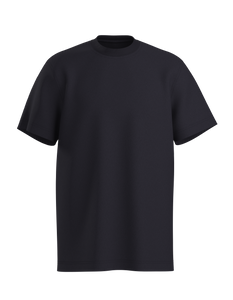
Our 210 GSM jersey works as a versatile transfer substrate. Its lighter weight and smooth hand suit tees, layering pieces, and mixed decoration runs.
Embroidery: Weight and Structure That Hold Stitches

Embroidery demands heavier fabrics that support dense stitch counts. Thin fabric distorts under thread tension, leaving puckered logos and warped detail. Weight and structure keep the design flat and clean.
Fabric weight, stretch, texture, and stitch density all help determine which embroidery backing to choose. The right stabilizer supports the fabric and controls movement while the design is stitched.
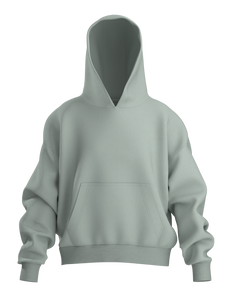
Our 420 GSM fleece suits embroidered logos. The heavy build supports higher stitch counts and holds raised detail without stretching. Proper stabilization combined with fabric structure gives you clean, dimensional results on hoodies and outerwear.
Embroidery fits corporate merch and premium team apparel where a stitched crest signals quality. When you compare blanks for screen printing and embroidery, embroidery is where fabric weight earns its keep.
Matching Blank Specs to Each Decoration Type
Match the method to fabric weight and fibre, then order. Screen printing and DTG want the 240 GSM organic cotton. Heat transfers pair well with the 210 GSM jersey. Embroidery belongs on the 420 GSM fleece.
These blank fabric requirements by decoration type run across our full catalogue. Organic cotton performs well for ink-based methods, jersey performs well for transfers and everyday wear, and fleece performs well for stitched details and cold-weather pieces.
Before approving the full run, test decoration on apparel samples and review edge sharpness, colour accuracy, coverage, puckering, and post-wash durability.
Single-source production keeps these specifications consistent from batch to batch. You order the same fibre, weight, and finish every time, so your decoration results stay predictable across reorders.
Scaling Decoration Across Teams and Organizations

You carry no MOQ on blanks and a 50-unit minimum on printed goods. That structure lets small businesses test freely while larger organizations commit to full production runs without overbuying.
You can mix decoration methods in a single program. Screen-printed tees, embroidered fleece, and heat-transferred jersey can ship together while each garment remains matched to its method.
As volumes grow, document your blanks, artwork, placements, thread or ink colours, and approved decoration methods so you can scale decoration into repeatable production without changing the result between orders.
FAQs
Which blank works best for screen printing?
Choose a smooth, tightly knit cotton blank that provides an even surface for crisp ink coverage and accurate registration.
Is DTG or DTF better for small apparel runs?
DTG works well for detailed cotton prints, while DTF offers more flexibility across different fabric types and smaller mixed-product runs.
What fabric weight is best for embroidery?
Heavier, structured fabrics usually support embroidery better because they resist puckering and hold dense stitching more securely.
Match the Blank to the Method Before You Order
Decoration quality is decided before the first screen, transfer, or needle touches the garment. Basico Branco aligns premium Portuguese blanks with printing, embroidery, private labelling, and packaging through one production system, helping you avoid mismatched fabrics, failed samples, and costly reprints.
Lock in the right blank and decoration combination for your next run through Basico Branco’s wholesale apparel program.