The Blank Apparel Sizing and Fit Guide for Brand Founders Ordering in Bulk
Your first bulk order is the point at which sizing stops being a detail and becomes a financial decision. Most founders fixate on fabric and print, then guess their way through the size breakdown. That guess is where the money leaks.
A wrong size mix locks up your capital in dead stock. You end up with a stack of XS you can't move, and a waitlist for the L and XL, which sold out in a week. Neither one pays your invoices.
This blank apparel sizing guide for bulk orders covers how to read fit, choose your size range, plan your first size curve, and hold fit consistent across reorders and decoration. The goal is simple: keep your money working instead of sitting on a shelf.
Why Sizing Is the Highest-Risk Decision in Your First Order
Sizing carries more downside than fabric choice on a first run. A slightly heavier or lighter fabric still sells. A garment nobody can fit into does not.
The wrong mix creates a chain of costs: returns, exchanges, and unsold inventory piled up across the sizes you over-ordered. Each one eats the margin you priced tight to win the sale.
Fit consistency across bulk apparel orders also drives retention. A customer buys a medium that fits, reorders, and gets a looser size. Trust drops. Reliable sizing keeps repeat buyers in your catalogue, rather than testing whoever ranks next in their search.
How to Read Fit Before You Read the Size Chart
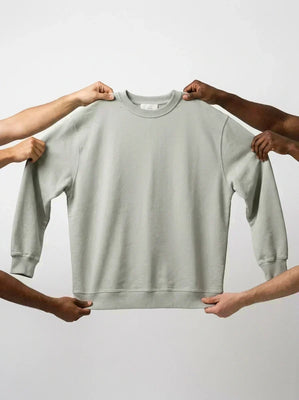
Fit starts with fabric weight, not the label. Heavier fabric holds structure and drapes with body. Lighter fabric sits closer to the frame.
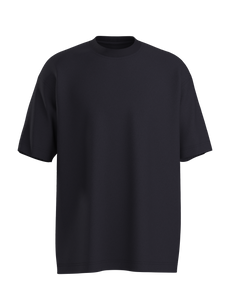
The three weights you'll work with behave differently. A 240 GSM organic cotton tee holds a clean, structured shape. A 210 GSM jersey reads softer and falls closer to the body. A 420 GSM fleece adds bulk and sits fuller.
Regular, relaxed, and boxy fits shift across garment types, so a boxy tee and a boxy sweatshirt feel different on the same person. Side-seam construction matters too. A side-seamed garment keeps its true-to-size shape and resists twisting after washes, which makes the fit predictable across a run.
Understanding Unisex, Men's, and Women's Sizing
Unisex sizing gives you one range that covers most customers without splitting inventory. It's built on a straighter cut that works across a wide set of frames.
Unisex works for streetwear, team apparel, and general merch where a relaxed fit is the point. You need gendered cuts when your customer expects a tailored shape, like fitted women's tees or shaped athletic wear.
Watch how unisex reads on different bodies. Smaller frames get a looser, oversized look. Larger frames get a closer, more standard fit. Knowing that lets you set expectations before the first sale lands.
How to Size Blank Apparel for Your Clothing Brand

Match your size range to the customer you sell to, not the widest audience you can picture. A youth streetwear line and a corporate merch program need different ranges.
Read both body measurements and garment measurements. Body measurements tell you which size fits. Garment measurements tell you how the finished piece behaves once it is cut and sewn. Use standard body-measurement definitions so every measurement is taken from consistent reference points.
Align sizing with your positioning. A premium brand commits to accurate, consistent measurements because fit is part of the product promise, the same way a $25 to $35 CAD organic cotton shirt earns its price through build quality.
Using a Size Chart That Reflects Real Measurements
Chest, length, and sleeve decide fit. Get those three right, and the rest follows.
Measured specs beat generic S-M-L labels because labels drift between suppliers and numbers do not. A useful chart clearly separates body and garment measurements, helping customers understand both who the size is intended for and how the finished piece will fit.
Publish the measured specs so customers order once and keep the garment. Before committing to the full size run, evaluate apparel samples for measurements, fit, shrinkage, construction, and consistency across sizes. Handling the garment tells you more than any chart, and it protects your capital before you scale.


Size Grading for Wholesale Blank T-Shirts
Size grading is the system that scales a pattern up and down so every size keeps the same proportions. Consistent grading is why a small and an XL feel like the same garment in two sizes.
Our Portugal-based production controls grading in-house, so the jump between sizes stays uniform across the run. No drift creeps in from a third-party cutter working from a loose specification.
The vertically integrated model keeps fit uniform across reorders. Blanks, private labelling, printing, and embroidery all happen under one roof, so your second and third orders match the first. Documenting approved measurements and grading expectations also helps you scale from your first order to ongoing production without allowing fit to drift between batches.
How to Pick Your Size Breakdown for a First Order
Most general audiences follow a predictable curve weighted toward the middle. A common split runs light on XS and XXL, heavy on M and L.
Adjust the curve for your buyer. Gym and studio orders skew toward smaller athletic sizes. Corporate programs need a fuller range across every body in the office.
No MOQ on blanks lets you test size demand before you commit budget. Order a small spread, see what sells, then scale the winners. On printed merchandise, the 50-unit MOQ means you plan the curve inside that batch instead of gambling across thousands of units.
Sample Size Curves by Use Case
A retail brand spreads sizes across the full range to catch walk-in demand. Event or team apparel concentrates on known counts, since you usually have a roster or headcount in hand.
Sports collaborations like the Canucks and Calgary Flames partnerships plan their size mix around a defined audience, which takes most of the guesswork out. You can borrow that logic by anchoring your curve to real customer data.
When you're unsure, order extra mid-range sizes. M and L carry the least risk because they sell across the widest set of customers.
Keeping Fit Consistent Across Reorders and Decoration

Single-source production prevents fit drift. When one facility handles the pattern, grading, and sewing, your reorder matches your first run rather than shifting by half a size.
Use dimensional-change testing to check whether garment length and width remain within an acceptable tolerance after washing and drying.
Printing and embroidery affect perceived fit too. A dense print or heavy embroidery panel changes how the fabric moves, so placement matters as much as size. Before approving artwork, choose the right blank for each decoration method, since fabric weight, construction, and shrinkage can affect the final fit.
FAQs
How do you choose a size breakdown for a first bulk order?
Use customer data, sample feedback, and expected audience demographics. Keep more stock in mid-range sizes unless your buyers show a different pattern.
Are unisex sizes the same as men’s sizes?
Not exactly. Unisex garments usually have a straighter, more relaxed cut, so the same labelled size can fit differently across body types.
Should brands order samples before choosing their size curve?
Yes. Samples let you verify measurements, fit, shrinkage, and grading before committing your budget to a full size run.
Protect Your Margin With the Right Size Run
Every unit ordered in the wrong size is cash your brand cannot reinvest. Basico Branco lets you test blanks without an MOQ, review measured size guides, and move into decorated production after the fit and size curve are proven.
Protect your first bulk order and keep future reorders consistent by building your size plan through Basico Branco’s wholesale apparel program.